before Kay and Gerda's childhood
The Demon Makes the Mirror
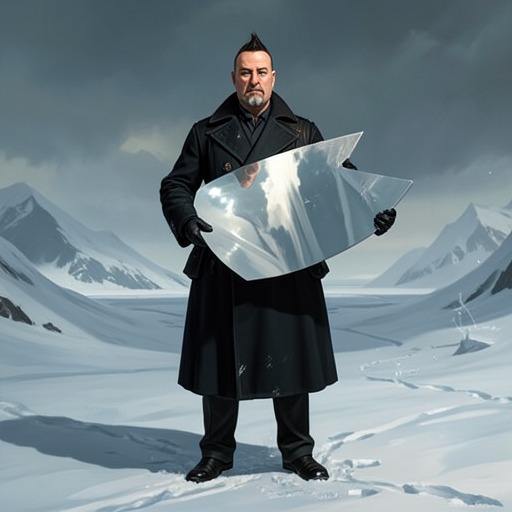
In a merry mood, the [Demon](entity:character-recall-character-demon-616c242ccaa1) fashioned a looking-glass that shrank whatever was good or beautiful and magnified whatever was ugly or bad. Through it, lovely landscapes became grotesque, and even a small flaw could seem to consume a person's face.
The mirror did more than distort appearances: it also twisted good thoughts as they passed through the mind. Its power established the story's central danger, a way of seeing that mistook cruelty and fault-finding for truth.
after the mirror's creation
The Mirror Reaches the World
The [Demon](entity:character-recall-character-demon-616c242ccaa1) delighted in the invention and kept a school where his followers praised its distortions. They carried the mirror across countries, insisting that it revealed the true nature of people and the world.
At last, they tried to take it up to heaven to examine the angels. The higher they flew, the more slippery it became, until it dropped from their hands and shattered. The Demon laughed at the damage, unaware that the fragments could continue his work even more widely than the whole mirror had.
after the mirror falls to earth
The Fragments Scatter
Millions of fragments spread through the air and into every country. Even an atom-sized piece could distort what its bearer saw, making the worst side of everything seem like the whole truth.
Some fragments lodged in eyes; others entered hearts and made them cold. Larger pieces became panes or spectacles, carrying the mirror's injustice into ordinary acts of looking. This lingering corruption would soon reach two children who loved each other.
during Kay and Gerda's childhood
Kay and Gerda's Rooftop Garden
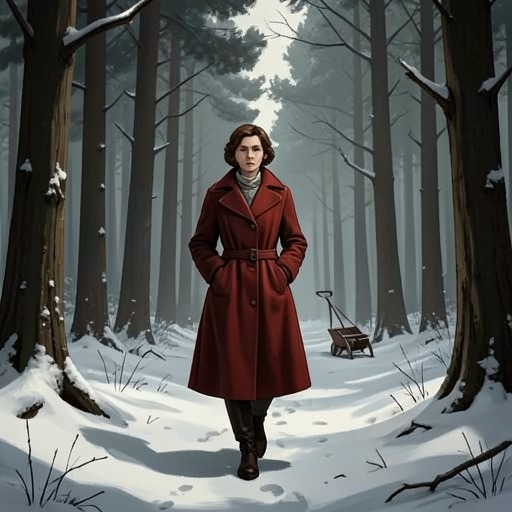
In a crowded town, [Kay](entity:character-recall-character-kay-2946c1889f8a) and [Gerda](entity:character-recall-character-gerda-e264fc170c07) lived in neighboring garrets. Their families set flower boxes across the gutter between the windows, and the rose branches grew together like a small green arch where the children could sit and play.
They were not brother and sister, but they loved one another as if they were. In winter they warmed pennies on the stove and melted little holes in the frozen panes so they could see each other, preserving their closeness even when the garden was buried under snow.
one winter evening before the spring
The Snow Queen Appears
When [Grandmother](entity:character-recall-character-grandmother-0f8797f74c19) described the white bees and their queen, [Kay](entity:character-recall-character-kay-2946c1889f8a) joked that he would melt her on the stove if she came inside. Later, as he peered through a hole in the frozen window, one snowflake grew into a tall woman of glittering ice.
The [Snow Queen](entity:character-recall-character-snow-queen-5961670d76f8) nodded and waved to him. Kay sprang away in fright, but the encounter foreshadowed the hold she would later gain over him. The next day brought clear frost, and then the season turned toward spring.
the summer before Kay is taken
The Rose and Christ Child Hymn
With the return of warm weather, [Kay](entity:character-recall-character-kay-2946c1889f8a) and [Gerda](entity:character-recall-character-gerda-e264fc170c07) sat among the roses on the roof. Gerda had learned a hymn about roses and sang it with Kay: roses bloom and fade, but they would see the Christ-child.
Hand in hand, they kissed the flowers and spoke to the sunlight as if the Christ-child were present. The song became a sign of the faith and tenderness Kay would lose under the mirror's influence, and that Gerda would carry with her through her search.
after the summer garden scenes
The Shards Enter Kay
As [Kay](entity:character-recall-character-kay-2946c1889f8a) and [Gerda](entity:character-recall-character-gerda-e264fc170c07) looked at a book, Kay suddenly felt something strike his heart and something enter his eye. Gerda could find nothing there, and Kay soon insisted that the pain had passed.
It had not passed: a fragment of the distorted mirror remained in his eye, while another settled in his heart and turned it cold. From then on, beauty and kindness appeared foolish to him, and the corruption that had begun in the [Demon](entity:character-recall-character-demon-616c242ccaa1)’s invention took hold in the children's lives.
soon after the fragments enter Kay
Kay Rejects the Roses
[Kay](entity:character-recall-character-kay-2946c1889f8a) began to sneer at the roses, picking them off and kicking their boxes. He mocked [Gerda](entity:character-recall-character-gerda-e264fc170c07)'s picture book and [Grandmother](entity:character-recall-character-grandmother-0f8797f74c19)'s stories, then entertained other people by imitating their faults and mannerisms.
What others praised as cleverness was the mirror's distortion working through him. His cruelty reached even Gerda, who loved him, and his games shifted from shared childhood play toward cold inspection and ridicule.
the following winter
Kay Studies the Snowflakes
[Kay](entity:character-recall-character-kay-2946c1889f8a) used a burning-glass to magnify snowflakes on his coat. He admired their precise shapes and called them more interesting than real flowers because they seemed perfect until they melted.
The game suited the fragment in his eye: it made cold scrutiny seem superior to living beauty. Soon afterward, Kay took his sledge out to join the boys in the town square, where the [Snow Queen](entity:character-recall-character-snow-queen-5961670d76f8) was waiting.
during that winter
The Snow Queen Takes Kay Away
In the square, [Kay](entity:character-recall-character-kay-2946c1889f8a) tied his little sledge to a large white one. Its driver repeatedly nodded whenever he tried to unfasten himself, and the sledge carried him beyond the town and into a blinding snowfall.
The driver revealed herself as the [Snow Queen](entity:character-recall-character-snow-queen-5961670d76f8). She drew Kay into her warm fur and kissed him; the kiss chilled his heart further and made him forget [Gerda](entity:character-recall-character-gerda-e264fc170c07), [Grandmother](entity:character-recall-character-grandmother-0f8797f74c19), and home. She warned that another kiss might kill him, then carried him away beneath the winter sky.
after Kay disappears and spring returns
Gerda Begins Her Search
No one knew where [Kay](entity:character-recall-character-kay-2946c1889f8a) had gone. The boys could only say that he had attached his sledge to a larger one, and [Gerda](entity:character-recall-character-gerda-e264fc170c07) wept as winter dragged on, believing he might have drowned in the river.
When spring came, the sunshine and sparrows resisted her certainty that Kay was dead. Gerda decided to ask the river for him and offered it her cherished [Red Shoes](entity:object-recall-object-8f8ab31e1299) in exchange for his return, beginning a search that would take her far beyond the town.
early in Gerda's search
Gerda Drifts Downriver
The river carried [Gerda](entity:character-recall-character-gerda-e264fc170c07)'s [Red Shoes](entity:object-recall-object-8f8ab31e1299) back to the bank, and she thought she had not thrown them far enough. She climbed into an unfastened boat to cast them again, but the boat drifted away before she could get ashore.
Barefoot, she sat helplessly as the current bore her onward. Sparrows flew beside the bank, calling out as if to encourage her, while the countryside changed around her and she hoped the river might lead her to [Kay](entity:character-recall-character-kay-2946c1889f8a).
after Gerda's boat leaves the town
The Conjuring Woman Finds Gerda
[Gerda](entity:character-recall-character-gerda-e264fc170c07)'s boat reached a cherry orchard and a small house, where the [Conjuring woman](entity:character-recall-character-conjuring-woman-cd4ea4dfbf8b) used her crutch to draw the boat to shore. She welcomed the exhausted child, listened to her story, and told her that [Kay](entity:character-recall-character-kay-2946c1889f8a) had not passed that way but might come later.
Gerda accepted the woman's kindness and entered the house, where colored windowpanes filled the rooms with unusual light. The promise of cherries and flowers offered comfort, but the Conjuring woman had a reason to keep the child with her.
during Gerda's stay with the Conjuring woman
Gerda Enters the Flower Garden
As the [Conjuring woman](entity:character-recall-character-conjuring-woman-cd4ea4dfbf8b) combed [Gerda](entity:character-recall-character-gerda-e264fc170c07)'s hair, she used magic to remove the roses from her garden. She feared that seeing them would remind Gerda of home and send her back to the search for [Kay](entity:character-recall-character-kay-2946c1889f8a).
She then brought Gerda into a garden where flowers from every season bloomed at once. Gerda delighted in it and played there day after day, while the Conjuring woman's spell made her forget what she had set out to do.
after many days in the flower garden
The Rose Returns
[Gerda](entity:character-recall-character-gerda-e264fc170c07) noticed a painted rose on the [Conjuring woman](entity:character-recall-character-conjuring-woman-cd4ea4dfbf8b)'s hat and realized that there were no roses in the garden. She searched among the beds and wept where one of the hidden rose trees had sunk beneath the earth.
Her tears brought the rose tree back to life. Gerda embraced the flowers, remembered the roses at home, and with them remembered [Kay](entity:character-recall-character-kay-2946c1889f8a). When she asked whether he was dead, the roses answered that they had been among the dead but had not seen him there.
during Gerda's search through the garden flowers
The Tiger Lily's Vision
[Gerda](entity:character-recall-character-gerda-e264fc170c07) asked the tiger lily whether it knew where [Kay](entity:character-recall-character-kay-2946c1889f8a) was. The flower answered with a vision of a widow beside her husband's funeral pyre, absorbed in thoughts of her son as the flames rose around her.
The story spoke of grief and the fierce life of the heart, but it gave Gerda no clue about Kay. She understood little of the flower's meaning and continued asking the others.
after the tiger lily's answer
The Convolvulus's Vision
The convolvulus described a beautiful maiden waiting on a castle balcony, watching the road for someone who had not arrived. [Gerda](entity:character-recall-character-gerda-e264fc170c07) asked whether the absent person was [Kay](entity:character-recall-character-kay-2946c1889f8a).
The flower said it was only speaking of its own dream. Like the tiger lily's tale, its vision belonged to the flower rather than to Gerda's search, leaving her no nearer to her friend.
after the convolvulus's answer
The Snowdrop's Vision
The snowdrop told of two girls swinging while their brother blew bright bubbles. A little dog tried to join them, fell, and barked; the children leaned down, and a bubble burst.
[Gerda](entity:character-recall-character-gerda-e264fc170c07) found the story pretty but mournful and pointed out that it said nothing about [Kay](entity:character-recall-character-kay-2946c1889f8a). The flowers' private visions continued to delay her, even as they showed how little their own beauty could help with the question she carried.
after the snowdrop's answer
The Hyacinths' Vision
The hyacinths sang of three sisters dancing in moonlight and vanishing into the forest. Their vision ended with three coffins floating across a lake, while evening bells tolled for the dead.
The tale frightened [Gerda](entity:character-recall-character-gerda-e264fc170c07), who asked whether [Kay](entity:character-recall-character-kay-2946c1889f8a) might also be dead. The hyacinths replied that they were not tolling for him and knew nothing about him; their song could offer atmosphere, not guidance.
after the hyacinths' answer
The Buttercup's Vision
[Gerda](entity:character-recall-character-gerda-e264fc170c07) asked the buttercups, shining like little suns, to tell her where her playmate was. They answered with an image of an old woman receiving a visit from her poor young granddaughter on a bright spring morning.
The warmth of their kiss seemed to turn everything to gold. Gerda thought of [Grandmother](entity:character-recall-character-grandmother-0f8797f74c19), who must be longing for her, and recognized that the flowers knew only their own stories, not [Kay](entity:character-recall-character-kay-2946c1889f8a)'s whereabouts.
after the buttercup's answer
The Narcissus's Vision
The narcissus described a young dancer in a small room, washing her clothes and admiring her movements. The flower kept returning to its own reflection and fragrance rather than answering [Gerda](entity:character-recall-character-gerda-e264fc170c07)'s question.
Gerda rejected the irrelevant story and ran for the garden door. The rusty latch gave way, and she escaped barefoot into the wider world, finally free of the spell that had diverted her from [Kay](entity:character-recall-character-kay-2946c1889f8a).
after Gerda escapes the garden
Gerda Meets the Forest Crow
By the time [Gerda](entity:character-recall-character-gerda-e264fc170c07) rested on a stone, summer had passed and autumn was far advanced. A [Forest crow](entity:character-recall-character-forest-crow-6803f13480f5) approached, greeted her, and asked why she was alone in the world.
Gerda told him her story and asked about [Kay](entity:character-recall-character-kay-2946c1889f8a). The Forest crow thought he might know where Kay was and said that a young man resembling him had become associated with a [Princess](entity:character-recall-character-princess-5bee508041fa), giving Gerda new hope.
during Gerda's meeting with the Forest crow
The Princess Seeks a Suitor
The [Forest crow](entity:character-recall-character-forest-crow-6803f13480f5) explained that the [Princess](entity:character-recall-character-princess-5bee508041fa) had decided to marry a man who could speak properly when addressed, rather than one who merely looked grand. Her court announced that eligible young men could visit, and the suitor who answered best would be chosen.
Crowds came to the palace, but the candidates lost their composure before the Princess. The Forest crow had heard the story from the [Tame crow](entity:character-recall-character-tame-crow-40cf08af017c), his companion in the palace, and believed a poor young man who arrived on the third day might have been [Kay](entity:character-recall-character-kay-2946c1889f8a).
the third day of the suitor gathering
Kay Appears at the Palace
The young man walked confidently into the palace despite his poor clothes, noisy boots, and the richly dressed court. He told the [Princess](entity:character-recall-character-princess-5bee508041fa) that he had not come to woo her but to hear her wisdom, and the two seemed pleased with each other.
[Gerda](entity:character-recall-character-gerda-e264fc170c07) recognized the description as [Kay](entity:character-recall-character-kay-2946c1889f8a) and asked the [Forest crow](entity:character-recall-character-forest-crow-6803f13480f5) to take her to him. The Forest crow agreed to consult the [Tame crow](entity:character-recall-character-tame-crow-40cf08af017c), though he warned that getting a child into the palace would be difficult.
that evening
Gerda Searches the Palace at Night
The [Tame crow](entity:character-recall-character-tame-crow-40cf08af017c) arranged for [Gerda](entity:character-recall-character-gerda-e264fc170c07) to enter by a back staircase while the palace slept. She followed the two crows through halls where shadowy riders passed; the [Forest crow](entity:character-recall-character-forest-crow-6803f13480f5) explained that they were dreams sent to fetch the thoughts of the great people.
In the royal bedroom, Gerda lifted a lamp over a sleeping figure in a red bed and called [Kay](entity:character-recall-character-kay-2946c1889f8a)'s name. The sleeper was a [Prince](entity:character-recall-character-prince-0d58ca27fcd5) who only resembled Kay in the neck. Gerda broke down and told the Prince and [Princess](entity:character-recall-character-princess-5bee508041fa) how she had come so far, while the crows stood revealed as her helpers.
the morning after the palace search
The Prince and Princess Help Gerda
The [Prince](entity:character-recall-character-prince-0d58ca27fcd5) and [Princess](entity:character-recall-character-princess-5bee508041fa) praised the crows for helping [Gerda](entity:character-recall-character-gerda-e264fc170c07) and chose a secure court appointment for them rather than punishing them. Gerda was offered a place at the palace, but she asked instead for practical help to continue looking for [Kay](entity:character-recall-character-kay-2946c1889f8a).
The Princess gave her warm clothes, a muff, and a golden carriage with attendants. The [Forest crow](entity:character-recall-character-forest-crow-6803f13480f5) accompanied Gerda for part of the journey, while the [Tame crow](entity:character-recall-character-tame-crow-40cf08af017c) remained behind; the aid carried Gerda onward but did not end her search.
during Gerda's journey through the forest
Robbers Seize the Golden Carriage
The golden carriage dazzled a band of robbers in the forest. They seized the horses and killed the coachman, footman, and small attendants, then dragged [Gerda](entity:character-recall-character-gerda-e264fc170c07) from the carriage.
The old robber-woman meant to kill and eat her, but her own daughter bit her and demanded that Gerda be kept as a playmate. The [Robber-girl](entity:character-recall-character-robber-girl-4a43d6376ad5)'s fierce intervention spared Gerda, though the child remained in the power of the robbers.
that night
Gerda Arrives at Robber Castle
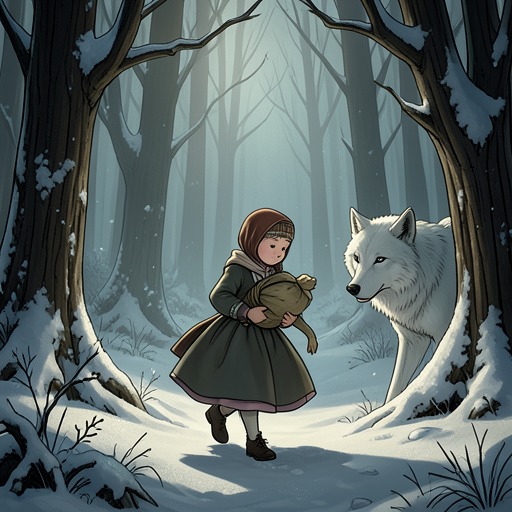
The [Robber-girl](entity:character-recall-character-robber-girl-4a43d6376ad5) took [Gerda](entity:character-recall-character-gerda-e264fc170c07) in her carriage to [Robber Castle](entity:location-recall-location-3f2bf4dc2be6), where ravens and crows crowded the broken walls and great dogs guarded the smoky hall. She said Gerda would not be killed unless she made them angry, then drew her close and claimed her warm muff.
In the hall, the Robber-girl showed Gerda her captive pigeons and a tied [Reindeer](entity:character-recall-character-reindeer-f9126d75a896), whom she tormented with a knife. That night she slept beside Gerda with the knife in her hand, while Gerda lay awake among the robbers, uncertain whether she would survive.
during the night at Robber Castle
The Wood Pigeons Report Kay
While [Gerda](entity:character-recall-character-gerda-e264fc170c07) lay awake, the [Wood Pigeons](entity:creature-recall-creature-bba3433cfc5f) told her that they had seen [Kay](entity:character-recall-character-kay-2946c1889f8a) in the [Snow Queen](entity:character-recall-character-snow-queen-5961670d76f8)'s carriage. They said the queen had blown on their nest, killing the young birds and leaving only two of them alive.
The pigeons believed the Snow Queen was travelling toward [Lapland](entity:location-recall-location-lapland-34769692e172). The [Reindeer](entity:character-recall-character-reindeer-f9126d75a896) confirmed that he knew the northern country and said the queen had a summer tent there and a strong castle near the [North Pole](entity:location-recall-location-caaa3bc49b04), on [Spitzbergen](entity:location-recall-location-8256d092a576).
the morning after the pigeons' report
The Robber-girl Frees Gerda
[Gerda](entity:character-recall-character-gerda-e264fc170c07) repeated what the [Wood Pigeons](entity:creature-recall-creature-bba3433cfc5f) had told her. Though the [Robber-girl](entity:character-recall-character-robber-girl-4a43d6376ad5) first dismissed it, she questioned the [Reindeer](entity:character-recall-character-reindeer-f9126d75a896) and accepted that he could lead Gerda toward [Lapland](entity:location-recall-location-lapland-34769692e172).
When the old robber-woman fell asleep after drinking, the Robber-girl untied the Reindeer and placed Gerda on his back. She gave Gerda warm mittens, boots, bread, and ham, then sent them off with instructions that the Reindeer must take her to [Kay](entity:character-recall-character-kay-2946c1889f8a).
after leaving Robber Castle
The Reindeer Carries Gerda North
The [Reindeer](entity:character-recall-character-reindeer-f9126d75a896) carried [Gerda](entity:character-recall-character-gerda-e264fc170c07) through forest and marshland, running day and night as wolves howled and ravens cried overhead. Red northern lights quivered in the sky, which he recognized as the lights of his homeland.
By the time they reached [Lapland](entity:location-recall-location-lapland-34769692e172), the bread and ham were gone. Their speed had brought Gerda closer to the [Snow Queen](entity:character-recall-character-snow-queen-5961670d76f8)'s country, but the journey ahead still required help from people who knew the far north.
on arrival in Lapland
The Lapland Woman Gives Directions
The [Reindeer](entity:character-recall-character-reindeer-f9126d75a896) and [Gerda](entity:character-recall-character-gerda-e264fc170c07) stopped at the hut of the [Lapland woman](entity:character-recall-character-lapland-woman-ddea418c5db8), who warmed them and listened to their story. She said they still had a long way to travel, with the [Snow Queen](entity:character-recall-character-snow-queen-5961670d76f8) then in [Finland](entity:location-recall-location-927c8bd1cf14), and wrote a message for the [Finland woman](entity:character-recall-character-finland-woman-43d7ca59f7f7) on a dried stockfish.
Once Gerda had eaten and recovered some warmth, the Lapland woman tied her back onto the Reindeer. The message sent them onward, carrying the first clear instructions toward the queen's present whereabouts.
after the journey from Lapland
The Finland Woman Explains Kay's Condition
At the [Finland woman](entity:character-recall-character-finland-woman-43d7ca59f7f7)'s hut, [Gerda](entity:character-recall-character-gerda-e264fc170c07) was too cold to speak, and the woman read the message written on the fish. The [Reindeer](entity:character-recall-character-reindeer-f9126d75a896) asked her to make Gerda powerful enough to defeat the [Snow Queen](entity:character-recall-character-snow-queen-5961670d76f8), but the Finland woman said strength from outside would be of little use.
She explained that [Kay](entity:character-recall-character-kay-2946c1889f8a) was with the queen and believed her icy realm was the finest place because a glass fragment remained in his eye and another in his heart. Gerda's own purity and innocence were the greatest power she could bring; the Finland woman sent the Reindeer to carry her close to the queen's garden.
near the Snow Queen's castle
Gerda Reaches the Queen's Garden
The [Reindeer](entity:character-recall-character-reindeer-f9126d75a896) carried [Gerda](entity:character-recall-character-gerda-e264fc170c07) to a bush bearing red berries, where the [Finland woman](entity:character-recall-character-finland-woman-43d7ca59f7f7) had told him to leave her. Gerda remembered that she had forgotten her boots and mittens, but the Reindeer dared not stop; after kissing her, he ran back toward the hut.
Alone and barefoot in the icy country, Gerda ran toward the [Snow Queen](entity:character-recall-character-snow-queen-5961670d76f8)'s domain. A regiment of living snowflakes formed around her, rising from the ground in frightening shapes to block her way.
immediately before Gerda enters the palace
Gerda Drives Back the Snowflake Sentries
[Gerda](entity:character-recall-character-gerda-e264fc170c07) prayed as the living snowflakes closed around her. Her breath rose like steam, and the steam took the shape of armed [Angels](entity:creature-recall-creature-9a1ea447d2b7) who grew in number as she continued.
The Angels struck the snowflakes and broke them apart, clearing a safe path. They warmed Gerda's hands and feet, and she went on toward the [Snow Queen](entity:character-recall-character-snow-queen-5961670d76f8)'s castle with courage rather than borrowed physical strength.
while Gerda approaches the palace
Kay Tries to Spell Eternity
Inside the vast [Palace of the Snow Queen](entity:location-recall-location-a91c874786ef), [Kay](entity:character-recall-character-kay-2946c1889f8a) sat alone beside a frozen lake broken into intricate shapes. He arranged sharp pieces of ice, treating the task as a game of reason and finding the patterns more important than anything beyond the hall.
The [Snow Queen](entity:character-recall-character-snow-queen-5961670d76f8) had promised him freedom, the whole world, and new skates if he could spell [Eternity](entity:time-recall-time-eternity-3489794a9a2a). The mirror fragment in his eye guided his cold judgment, but he could not make the letters. Calling the lake her [Mirror of Reason](entity:concept-recall-concept-mirror-of-reason-8c23c8f2c4b1), the queen left for warmer countries and left Kay to the puzzle.
after the Snow Queen leaves the palace
Gerda Finds Kay
[Gerda](entity:character-recall-character-gerda-e264fc170c07) entered the immense snow hall, found [Kay](entity:character-recall-character-kay-2946c1889f8a) sitting still among the ice pieces, and threw her arms around him. He remained stiff and cold, seemingly unable to recognize her.
Gerda's hot tears fell on his chest, thawing the ice in his heart and washing away the fragment lodged there. She sang the Rose and Christ Child hymn; Kay began to weep, and the fragment in his eye was washed out as well. He recognized Gerda and saw the cold emptiness of the palace at last.
immediately after Kay recognizes Gerda
The Ice Spells Eternity
As [Kay](entity:character-recall-character-kay-2946c1889f8a) and [Gerda](entity:character-recall-character-gerda-e264fc170c07) laughed and wept together, the ice pieces danced. When the children grew tired and lay down, the pieces arranged themselves into the word [Eternity](entity:time-recall-time-eternity-3489794a9a2a), the very word Kay had failed to form.
The [Snow Queen](entity:character-recall-character-snow-queen-5961670d76f8)'s condition had been fulfilled, and Kay stood free without having mastered the puzzle through cold calculation. Gerda's presence had restored his ability to feel and recognize what mattered, undoing the power the mirror fragment and the queen had held over him.
after the word Eternity appears
The Children Leave the Ice Palace
[Kay](entity:character-recall-character-kay-2946c1889f8a) and [Gerda](entity:character-recall-character-gerda-e264fc170c07) took each other's hands and left the [Palace of the Snow Queen](entity:location-recall-location-a91c874786ef). The winds rested, the sun broke through, and at the red-berry bush they found the [Reindeer](entity:character-recall-character-reindeer-f9126d75a896) waiting with another young reindeer.
The children drank the young animal's warm milk, then returned to the [Finland woman](entity:character-recall-character-finland-woman-43d7ca59f7f7) and the [Lapland woman](entity:character-recall-character-lapland-woman-ddea418c5db8) to warm themselves and receive help for the journey. Their passage south retraced the route that had brought Gerda toward the palace, now with Kay beside her.
during the children's return journey
The Robber-girl Reappears
Near the first budding leaves, [Kay](entity:character-recall-character-kay-2946c1889f8a) and [Gerda](entity:character-recall-character-gerda-e264fc170c07) took leave of the two northern women and the [Reindeer](entity:character-recall-character-reindeer-f9126d75a896). Birds were beginning to sing when a horse appeared, carrying the [Robber-girl](entity:character-recall-character-robber-girl-4a43d6376ad5) northward on her own travels.
The Robber-girl recognized Gerda and challenged Kay for having allowed someone to go to the end of the world to find him. Gerda asked after the [Prince](entity:character-recall-character-prince-0d58ca27fcd5), [Princess](entity:character-recall-character-princess-5bee508041fa), and [Forest crow](entity:character-recall-character-forest-crow-6803f13480f5); the Robber-girl reported that the royal pair had gone abroad and that the Forest crow had died.
after the northern journey
Kay and Gerda Return Home
After telling the [Robber-girl](entity:character-recall-character-robber-girl-4a43d6376ad5) how [Kay](entity:character-recall-character-kay-2946c1889f8a) had been freed, the children continued home hand in hand. [Spring](entity:time-recall-time-spring-5076a6d014bd) grew greener around them, and the church bells rang as they recognized their town and found their way back to [Grandmother](entity:character-recall-character-grandmother-0f8797f74c19)'s door.
The familiar room, its clock, their small chairs, and the roses at the window welcomed them. Though they had grown into a man and a woman, they sat together as they had in childhood, with the [Snow Queen](entity:character-recall-character-snow-queen-5961670d76f8)'s icy grandeur fading from memory like a painful dream.
at the end of the story
The Children Hear Grandmother's Reading
[Grandmother](entity:character-recall-character-grandmother-0f8797f74c19) sat in the sunshine and read that those who entered God's kingdom must become as little children. [Kay](entity:character-recall-character-kay-2946c1889f8a) and [Gerda](entity:character-recall-character-gerda-e264fc170c07) looked into each other's eyes and understood the words of the hymn they had shared among the roses.
They were grown, yet children at heart, and summer had returned. Their ending joined the story's faith in innocence to the love that had survived distance, distortion, and cold.